









Оперативная помощь, необходима была доработка, но все в срок было сделано. Спасибо!
Александра
Политех


это быстро и бесплатно

Оформите заказ сейчас и получите скидку 100 руб.!
ID (номер) заказа
6410929
Ознакомительный фрагмент работы:
Linguadidactics as a Theory of a Foreign Language Teaching
Данная презентация представляет лингводидактику как теоретическую основу обучения иностранным языкам. Она раскрывает её сущность, функции и ключевые законы, определяет понятия «язык», «обучение» и «преподавание», а также рассматривает основные компоненты учебного процесса: мотивацию, материалы, методы и оценку.Глоссарий (русский / English)Лингводидактика / Linguodidactics – Наука о теории и практике обучения иностранным языкам.Дидактика / Didactics – Общая теория обучения и образования.Обучение (языку) / Language Learning – Процесс приобретения знаний и навыков владения языком.Преподавание (языка) / Language Teaching – Целенаправленная деятельность по руководству и облегчению процесса обучения.Язык / Language – Система произвольных звуковых символов, используемая для человеческого общения.Коммуникация / Communication – Процесс обмена информацией между людьми.Речевое сообщество / Speech Community – Группа людей, объединенная общим языком.Билингвизм / Bilingualism – Владение двумя языками на высоком уровне.Владение языком / Language Proficiency – Уровень компетентности в использовании языка.Мотивация / Motivation – Фактор, побуждающий к учебной деятельности.Метод обучения / Teaching Method – Систематизированный способ преподавания.Оценивание / Assessment – Процесс измерения и оценки знаний и навыков.Прикладная лингвистика / Applied Linguistics – Направление лингвистики, решающее практические задачи, в т.ч. обучение языкам.Интерференция / Interference – Влияние родного языка на изучение иностранного.Усвоение / Acquisition – Естественное овладение языком, часто неосознанное.Символ (языковой) / (Linguistic) Symbol – Условный знак (например, слово), представляющий значение.Произвольность / Arbitrariness – Отсутствие прямой связи между словом и обозначаемым объектом.Содержание обучения / Teaching Material(s) – Учебный контент и ресурсы, используемые в процессе обучения.Обратная связь / Feedback – Реакция или оценка, предоставляемая обучаемому.Педагогика / Pedagogy – Наука о воспитании, образовании и обучении.History of Linguadidactics. Modern language policies.Презентация освещает историю лингводидактики через эволюцию методов: от грамматико-переводного до коммуникативного подхода. Рассматриваются интенсивные методы (суггестопедия) и современная языковая политика РФ в рамках ФГОС, где ключевой целью является формирование коммуникативной и социокультурной компетенций.Глоссарий (русский / English)Грамматико-переводной метод / Grammar-Translation Method – Исторический метод, основанный на изучении правил, переводе текстов и механическом запоминании.Прямой метод / Direct Method – Метод обучения, исключающий использование родного языка и делающий акцент на устной речи и индуктивном усвоении грамматики.Аудиолингвальный метод / Audiolingual Method (ALM) – Метод, основанный на бихевиоризме, где обучение происходит через повторение и закрепление языковых моделей.Аудиовизуальный метод / Audio-visual Method...
Recommended books:
1. Гальскова, Н. Д. Теория обучения иностранным языкам. Лингводидактика и методика [Текст] : учеб. пособие для студентов лингв. ун-тов и фак. иностр. яз. высш. пед. учеб. заведений / Н. Д. Гальскова, Н. И. Гез. - 6-е изд., стер. - Москва : Изд. центр "Академия", 2009. - 333, [3] с. - (Высшее профессиональное образование.Иностранные языки). - Библиогр.: с. 319-331. - ISBN 978-5-7695-6473-4 (в пер.)
2. Теория обучения иностранным языкам. Продуктивные образовательные технологии [Текст] : учеб. пособие для студентов лингвист. фак. вузов / Н. Ф. Коряковцева. - Москва : Изд. центр "Академия", 2010. - 188, [4] с. : табл. - (Высшее профессиональное образование. Иностранные языки). - Библиогр.: с. 185-189. -ISBN 978-5-7695-5949-5 (в пер.)
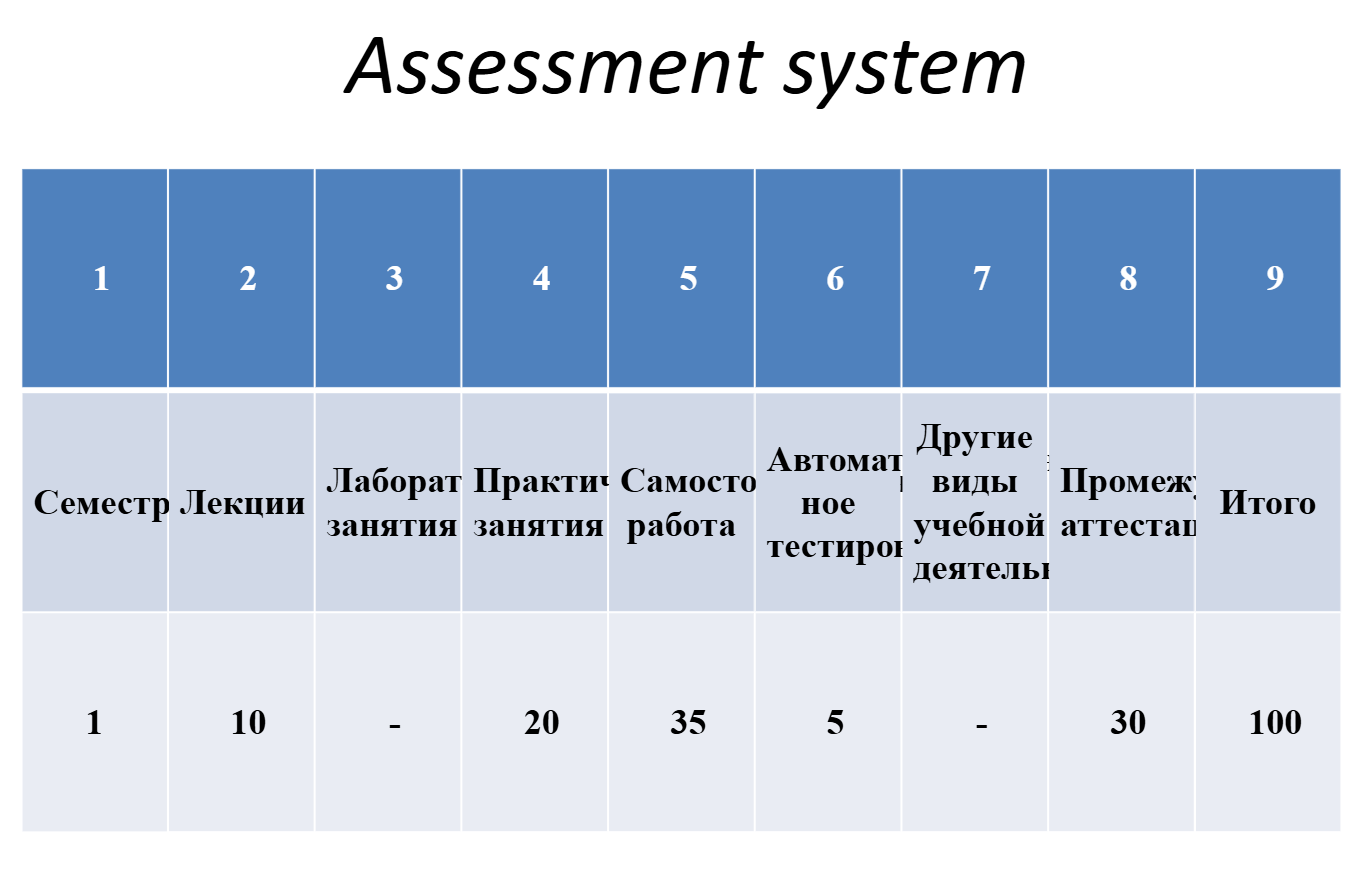
DIDACTICS=THEORY OF TEACHING
WHAT?
WHO TO?
WHEN?
WHERE?
WHY?
LINGUODIDACTICS = THEORY OF LANGUAGE TEACHING
Functions
theoretical;
practical;
Integrating.
LAWS
Interdependence of small units and of the whole
Interference
Connection of the form and content
I speak English because I learned Polish at the age of two.
I have forgotten every word of Polish, but I learned language.
Here, as in other human gifts, the brain is wired to learn.
(Jacob Bronowski 1973)
ARE YOU A BILINGUAL?
Complete mastery of two languages is designated as bilingualism
…bilingualism, the speaking of two or more languages by the members of the same community
a bilingual is someone who is equally balanced in both languages.
LANGUAGE
Language is a system of arbitrary (['ɑːbɪtr(ə)rɪ]), vocal symbols which permit all people in a given culture, or other people who have learned the system of that culture, to communicate or interact (Finocchario 1964:8)
Language is a system of communication by sound, operating through the organs of speech and hearing, among members of a given community, and using vocal symbols possessing arbitrary (['ɑːbɪtr(ə)rɪ] произвольный, случайный )conventional (общепринятый) meanings (Pei 1966:141)
Language is any set or symbols of linguistic symbols as used in a more or less uniform fashion by a number of people who are thus enabled to communicate intelligibly (вразумительно) with one another (Random House Dictionary of the English Language 1966:806).
Language is a system of arbitrary vocal symbols used for human communication (Wardhaugh 1972:3).
[Language is] any means, vocal or other, of expressing or communicating feeling or thought ... a system of conventionalized signs, especially words or gestures having fixed meanings. (Webster's New International Dictionary of the English Language 1934:1390).
Language is systematic and.
Language is a set of arbitrary symbols.
Those symbols are primarily vocal, but may also be visual.
The symbols have conventionalized meanings to which they refer.
Language is used for communication.
Language operates in a speech community or culture.
Language is essentially human, although possibly not limited to humans.
Language is acquired by all people in much the same way - language and language learning both have universal characteristics.
Learning
Learning is acquiring or "getting."
Learning is retention of information or skill.
Retention implies storage systems or memory, cognitive organization.
Learning involves active, conscious focus on and acting upon events outside or inside the organism.
Learning is relatively permanent but ‘subject to forgetting.
Learning involves some form of practice, perhaps reinforced practice.
Learning is a change in behavior
Teaching
guiding and facilitating learning,
enabling the learner to learn,
setting the conditions for learning
PUZZLE ELEMINTS
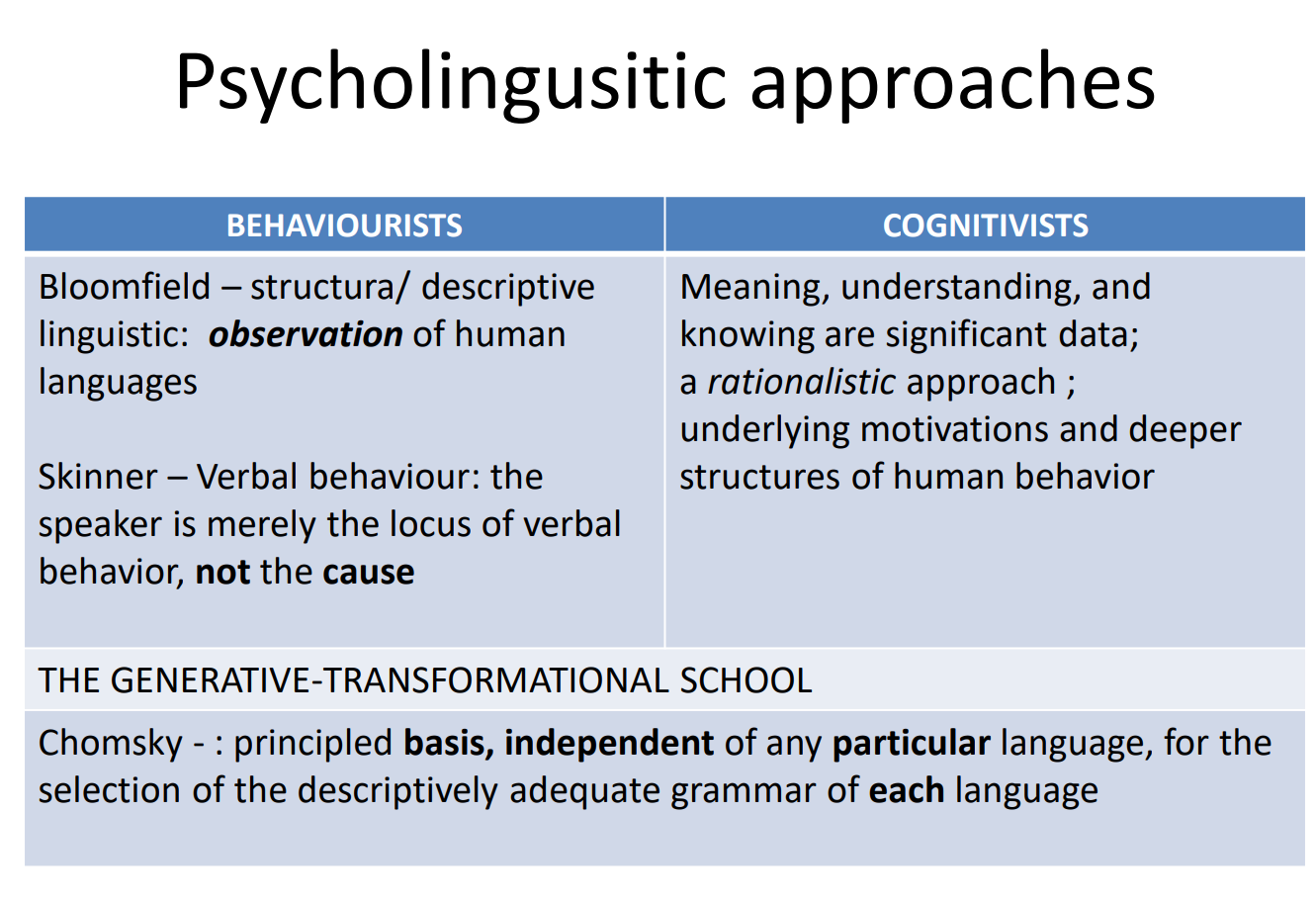
Trends in Linguistics and Psychology
Applied Linguistics
Pedagogy and didactics
Culture-oriented linguistics
Social studies
Theory and Methods of Teaching
History of Linguodidactics. Modern language policies
Mini-test
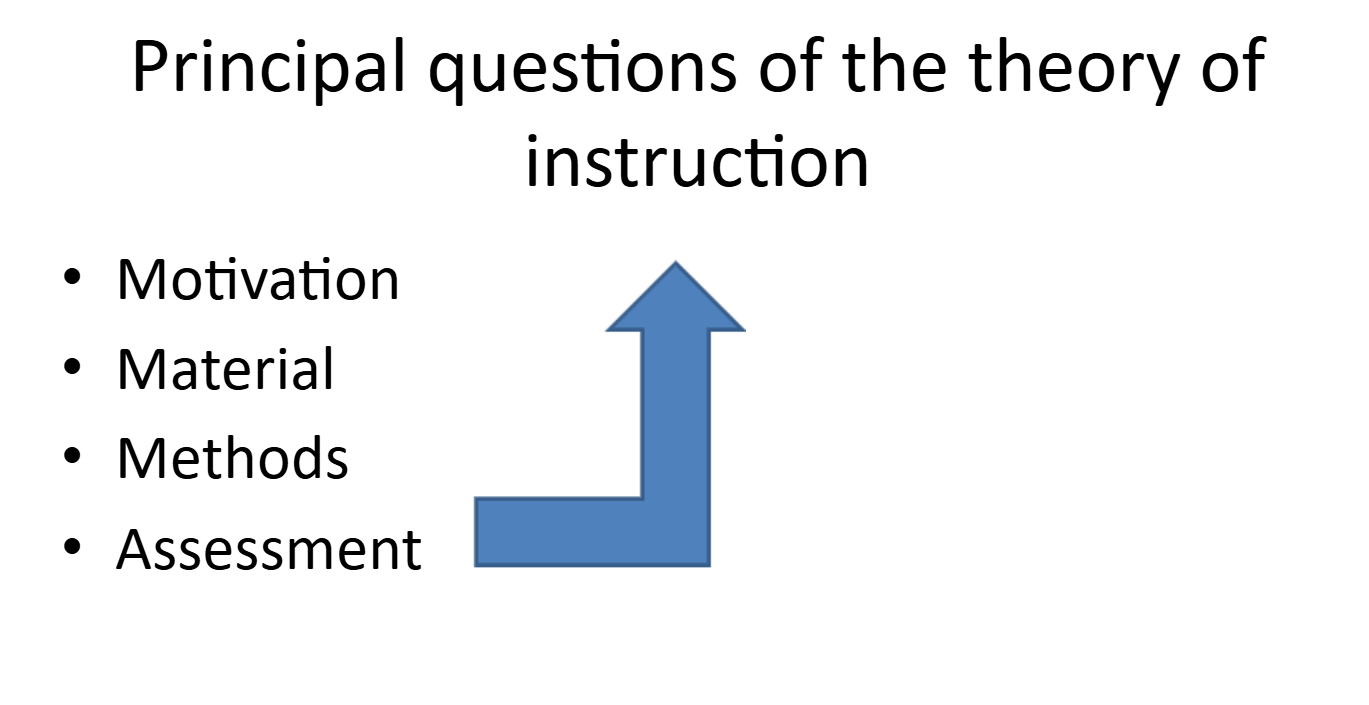
• 1. Innumerate the three principal functions of linguo-didactics
• 2. What is meant by a systematic means of communicating ideas or feelings by the use of conventionalized signs, sounds, gestures?
Grammar-Translation method
• a word is the principal didactic unit;
• focus on grammatical rules,
• memorization of vocabulary and of various declensions and conjugations,
• translation of texts, • doing written exercise.
Neither oral nor aural
Direct method
• teaching concepts and vocabulary through pantomiming, real-life objects and other visual materials;
• teaching grammar by using an inductive approach;
• centrality of spoken language;
• focus on question-answer patterns
The series method
Francois Gouin Using language to represent what one experiences.
Silent Way
• Communicative approach:
• 1. language as a means of expression;
• 2. language as an object of learning;
• 3. language as a means of expressing values and judgments about oneself and others;
• 4. remedial learning based on error analysis;
• 5. language learning within the school curriculum.
Intensive language teaching
• Suggestopedia
Bulgarian psychotherapist Georgi Lozanov.
• Г.А.Китайгородская’s intensive method
Стандарты
• ФГОС НОО
• ФГОС ООО
• ФГОС ВО
компетенции
Fundamental Education Content Core
• Basic goal – communicative competence in the second language (foreign).
• Socio-cultural basis of education, teaching cultures, tolerance to another cultural peculiarities AND teaching to represent the student’s own culture to the world by means of the second language.
BASIC EDUCATIONAL PROGRAMME.
Educational results. Foreign language:
• Teaching friendly and tolerant attitude to the values of other cultures, optimistic and personally expressive perception of the world, national identity development (the life of peers abroad, literature, ….)
• *communicative approach;
• * personality-centered education;
• * culturological education;
• * activity theory of learning.
а, б, в, г, д, е, ж, з, и, к, л, м, н
•2.1. пороговый уровень обучения
•2.2. уровень владения родным языком
•2.3. информационная компетенция
•2.4. образовательный стандарт
•2.5. деятельностное направление в обучении
•2.6. уровень владения неродным языком
•2.7. социокультурная компетенция
•2.8. коммуникативность
•2.9 грамматико-переводной метод
MINI -TEST
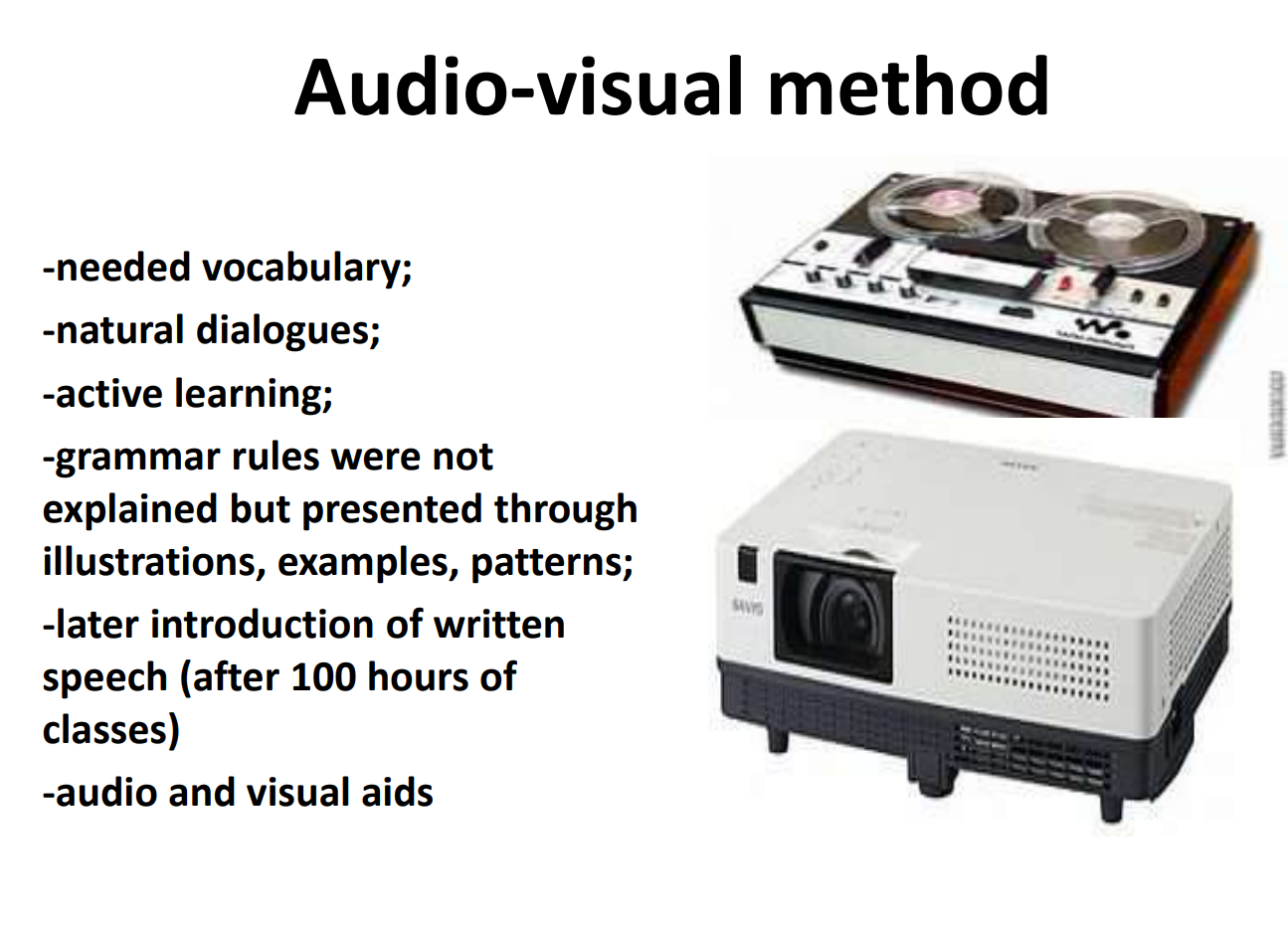
• 1. What method of FLT is characterized by the following points:
• -needed vocabulary;
• -natural dialogues;
• -active learning;
• -grammar rules were not explained but presented through illustrations, examples, patterns;
• -later introduction of written speech (after 100 hours of classes)
• -audio and visual aids?
• 2. What is the name of the method invented by Francois Gouin who went to Hamburg to learn German memorizing
grammar rules and root words?
PSYCHOLOGICAL FOUNDATION OF LINGUODIDACTICS
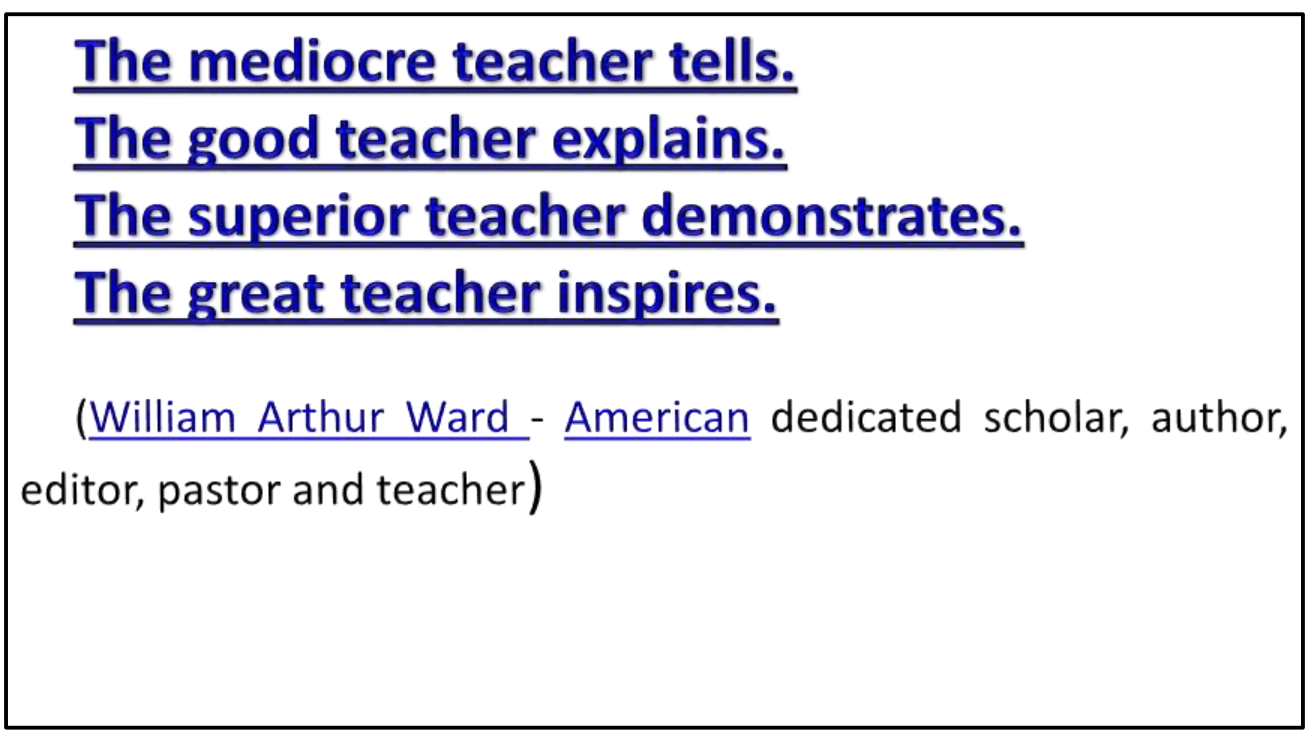
Quotation
“The art of teaching is the art of assisting discovery.” (Mark van Doren - American Writer and Educator, 1894-1972)
• It should be interesting for the children to study. There is no wish to study without interest.
• Parents should see the positive results achieved by their children
• The teacher should enjoy every class given by him.
УУД
• *learning motives,
• *leaning goals,
• *learning task ,
• *learning actions
УУД
– an ability of the learner to develop and improve oneself by means of conscious acquisition of new social experience, all that provides the social competence for the student, an ability to acquire knowledge independently, and an ability to organize the learning process independently.
1) personality (личностный)
2) regulatory (регулятивный)
3) cognitive (познавательный)
4) communicative (коммуникативный)
• Личностные УУД - an ability of students to find orientation in values and meanings
• - personal, professional, social selfdetermination;
• - finding meaning in the learning process, • - moral and ethic orientation/
Личностные УУД =
• Motivation – I want to know it because
… – Я хочу и буду знать, потому что…
• Why should I read, write, listen, speak English?
• What do I want to talk about, read, write about in English?
Регулятивные УУД- an ability of the student to organize his own learning :
• goal-setting
• planning
• prediction
• control
• correction
• assessment
• self-regulation
Познавательные УУД включают:
• general learning actions,
• actions with signs and symbols,
• logical actions,
• problem –setting and problemsolving.
General learning actions:
• an ability to determine the goal of a particular action, task independently;
• search for particular information, details;
• knowledge structuring;
• an ability to produce written and oral texts consciously and fluently;
• an ability to choose the most appropriate and effective was of problem –solving depending on the particular conditions;
reflection about the actions taken to solve the problem, selfassessment (both of the learning process and its results);
• reflective reading (what for and how to read)
ACTIONS WITH SIGNS AND SYMBOLS:
• • modeling, that is transformation of an object from its real (visible) form into a model representing the most essential characteristics of this object;
• • transformation of the model in order to single out general laws of the subject-matter.
Logical actions • analysis;
• synthesis — composing the whole out of its parts;
• the choice of comparison criteria;
• conclusion-making;
• an ability to understand cause-effect relationship;
• an ability to build up reasoning;
• an ability to prove the idea;
• an ability to put forward hypotheses and to find grounds for them .
Problem-setting and problem-solving:
• an ability to define a problem;
• an ability to find the ways of problem-solving independently
Cognitive actions =
• What words\expression do Englishmen use to …
• What information do I need to use in order to …
• What part of the text I’ve read / heard I should use in order to …
• Which words\expressions do I need to …
• Why am I writing/ reading/ saying this?
• What should I prove? How can I prove it?
• COMMUNICATIVE universal learning actions
• an ability to plan interaction with the teacher and other students;
• an ability to ask questions;
• an ability to behave adequately in conflicts, an ability to find the ways to settle the conflict;
• an ability to direct the partners verbal behavior;
• an ability to express one’s ideas clearly and fully according to the task set.
Communicative УУД =
• I think that…
• I see what you mean and quite agree / disagree….
• Could you help me…
• Excuse me…
Communicative competence
• linguistic
• socio-linguistic
• pragmatic
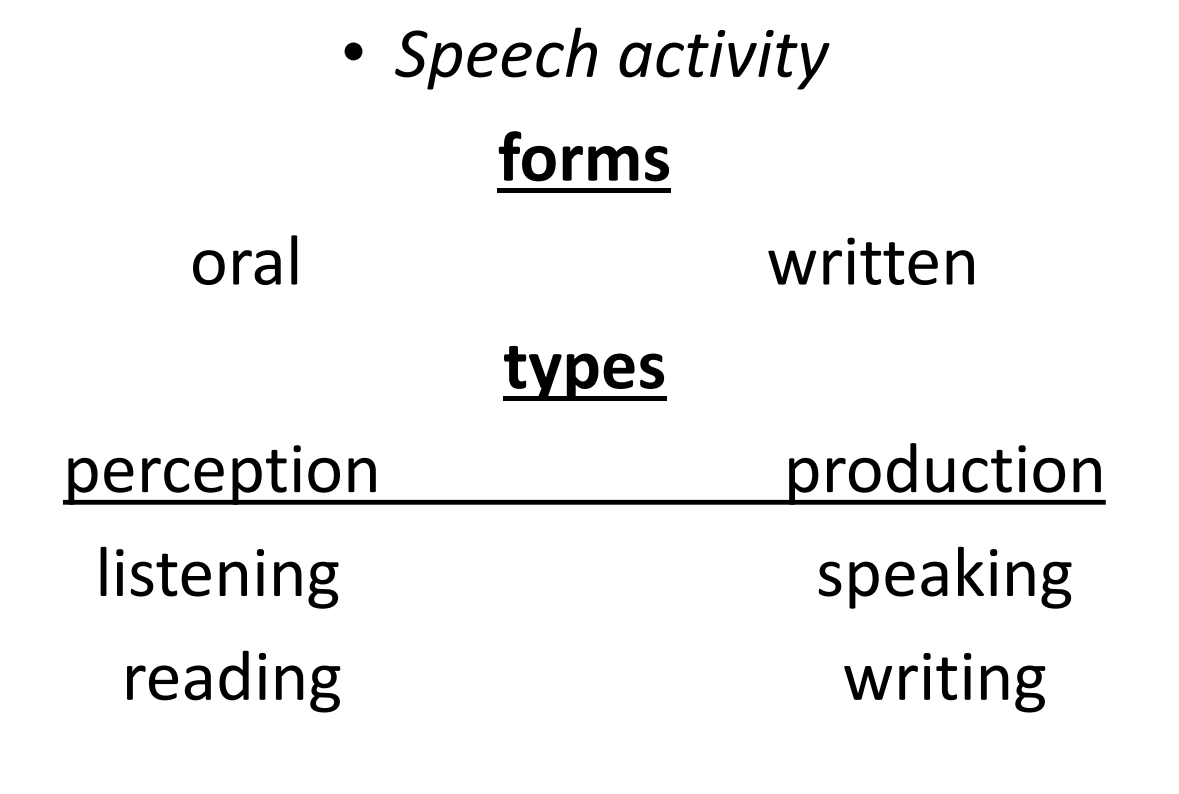
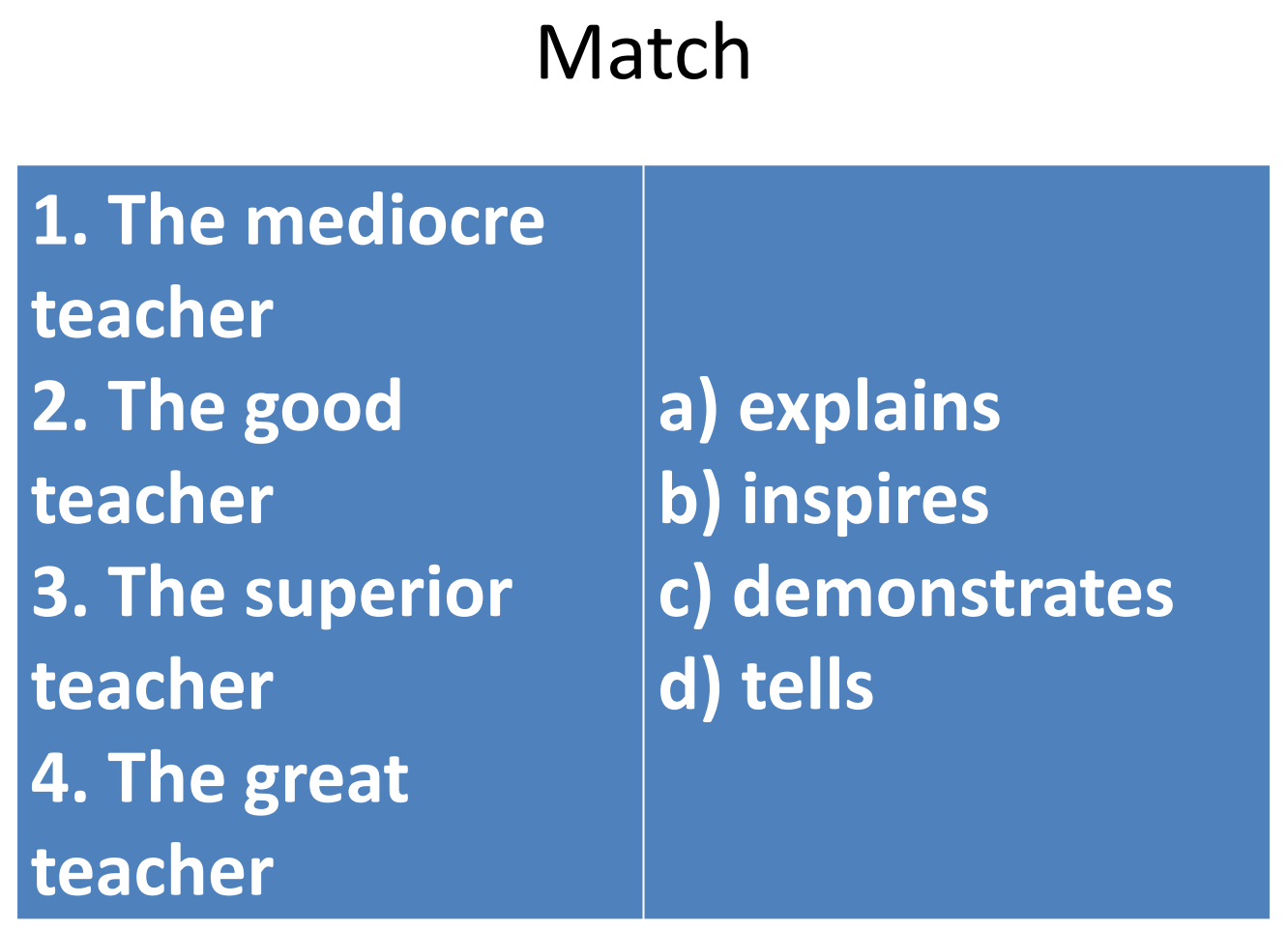
Communicative actions
• reading different texts aloud with proper intonation
• reproducing the text (using illustrations as a visual support)
• talking about (yourself/ friend, family, trip…)
• making a survey among the classmates so that to get particular information
• role-playing dialogues, fairy-tales
• singing songs….
Communicative actions
• writing different texts (personal letters, postcards);
• writing dictations (spelling dictations);
• producing independent creative papers
Forms of interaction
• pair work
• group work
• role-play
• discussion
REFLECTION
• Reflect on your own work at the lecture and assess it. Are there any new things that you’ve learned. Are they of any use to you? Why? Have you successfully perceived everything? Do you need to change your learning strategies?
DIDACTIC FOUNDATIONS OF THE COURSE
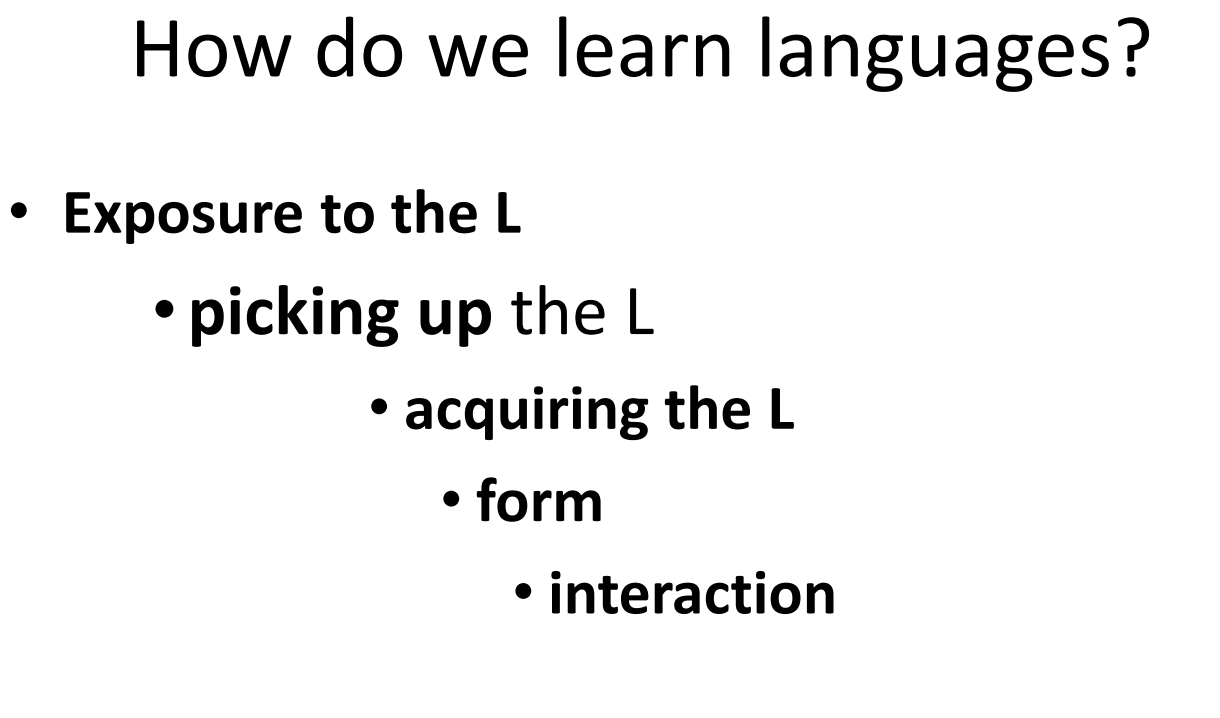
How do we learn languages?
• Exposure inside and outside the classroom;
• reading and hearing (graded, a challenging level);
• acquisition takes time (maybe, silent period);
• making mistakes first is unavoidable;
• necessary interaction with the language use;
• experimenting with language
How to teach?
• learners' age,
• learning experience
• learning styles
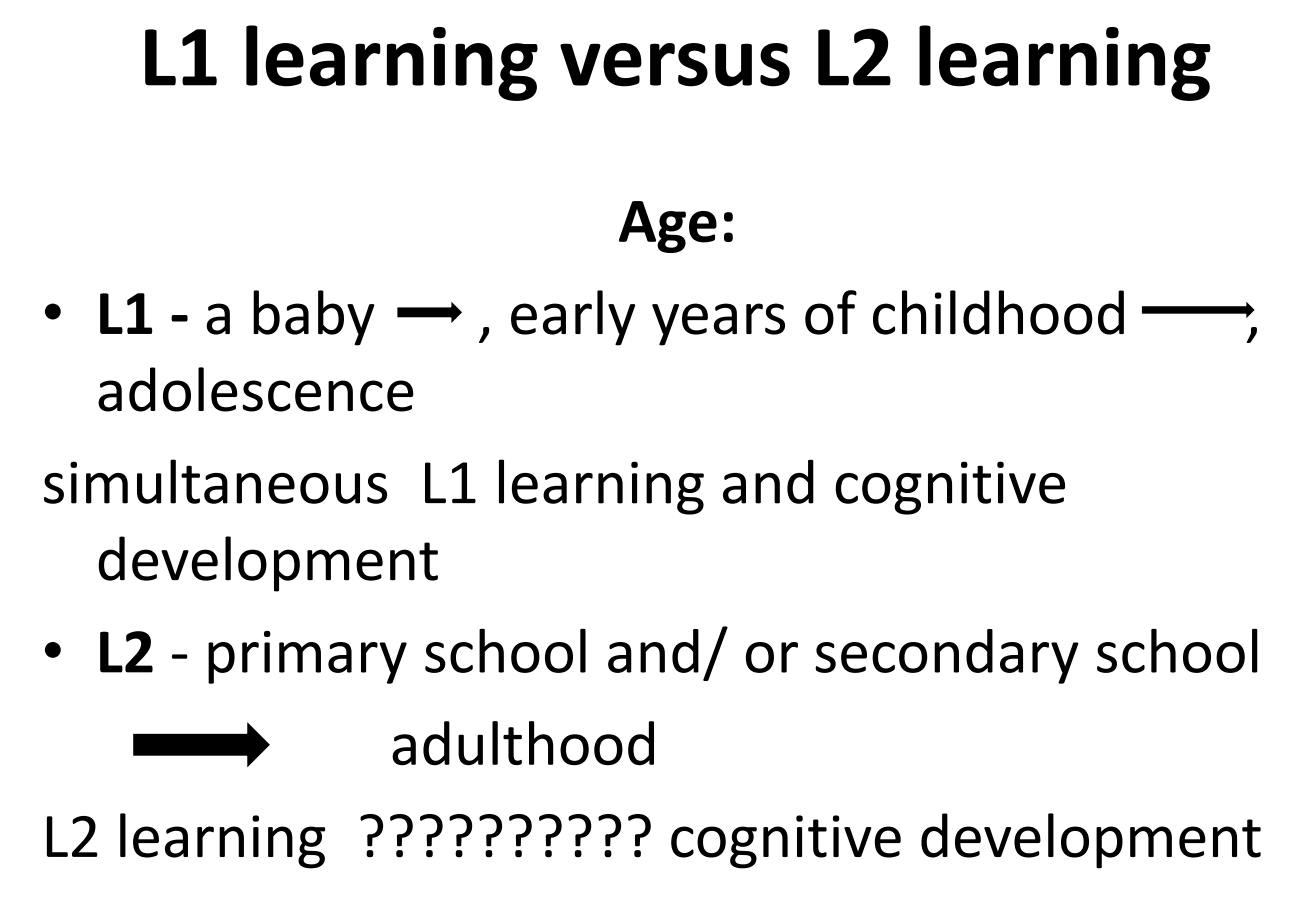
L1 learning versus L2 learning
• L1 learners are motivated (necessity to communicate)
• L2 learners have expectations, experience, ??? motivation
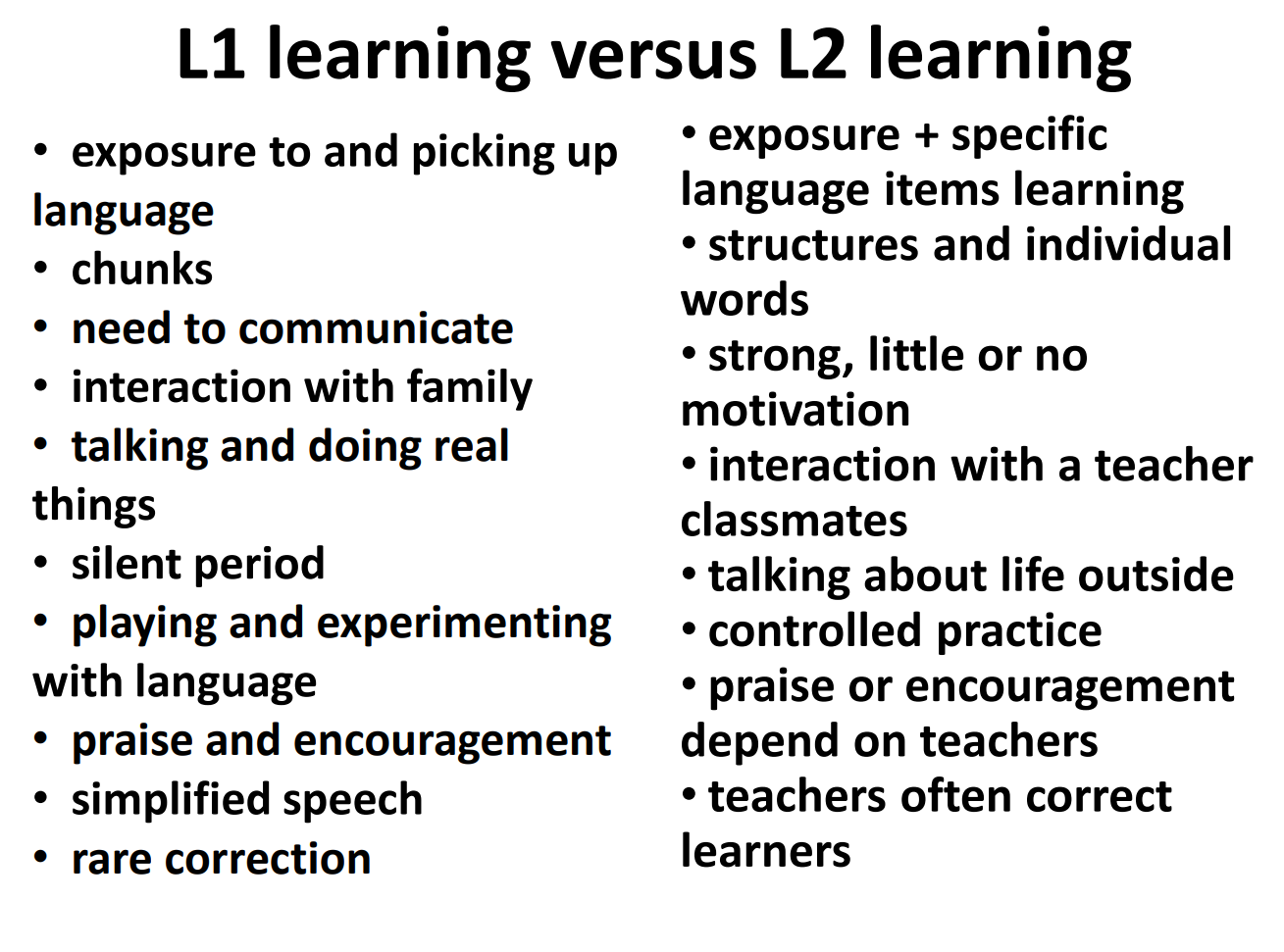
Exposure :
radio programmes, songs, books, magazines, use websites, podcasts, English-speaking friends, tourists, emails to English-speaking penfriends…..
• Interaction :
pair and group work, class presentations
• Simplifying our language :
motivation and confidence
• Praising learners .
Developmental teaching
• Active learning : “learning experiences in which the students are thinking about the subject matter”
• Reading (Treasure Hunt technique )
• Writing (incorporated writing)
• Discussing (Thumb’s Up technique , frame discussion)
• Problem-Solving (Think-Pair-Share)
Developmental teaching
• Teaching Inductively - inquiry or discovery teaching
• Leading discussions:
What most struck me about the reading was… A question I’d like to ask the author is … The idea I disagree with most strongly is … The part of the lecture/reading that made the most sense to me was …
Leading discussions
• students’ questions;
• writing the answers ;
• opening statement or an illustrative quote;
• recalling a real-life experience
E.G., reporting about the partner’s ideas, fishbowl, questions of How? or Why? type
Why doesn’t it work?
• Did students complete preparatory assignments?
• Have you modeled public critique of your ideas?
• Is the discussion focused on an open-ended question?
• Have you ensured that you’ve avoided answering the question you’ve posed?
• Have you linked the topic to a critical event in students’ previous experiences?
• My talking?
• What am I doing to build continuity and a sense of collaborative engagement?
GROUP WORK
• increasing learning;
• preparing students for the environment of teamwork in industry and other organizations;
• a knowledge structure based on the previous experiences ;
• use of the language of a profession or discipline;
• skills of asking questions and responding;
GROUP WORK EXAMPLE
Listening Teams
Questioners
Agreers
Naysayers
Example givers
FEEDBACK
• What information do you find the most useful?
• What things, ideas are the muddiest today?
• How would I improve\change the course of lectures? What else do I need to know on the topic discussed?
Practical class task (№ 1)
• Теоретические вопросы для доклада (портфолио):
1) Понятие «лингводидактика», отличие от «методики».
2) Объект и предмет лингводидактики как науки.
3) Взаимосвязь лингводидактики с другими науками.
Практические задания
1. Эссе-рассуждение:
• А) Является ли лингводидактики наукой?
• Б) Яйцо или курица? Изучите мнения известных ученых М.М. Бахтина, Б.М. Гаспарова, Ю.М. Лотмана, Н.И, Жинкина и др. по поводу того, что первично – язык или речь.
Изучите значение этих слов в толковых словарях русского и английского языков и сравните выявленные значения. Обоснуйте свою позицию и приведите соответствующую аргументацию.
• В) Основатель гуманистической психологии К. Роджерс говорил о ряде открытий, работая в тесном контакте с людьми: быть самим собой; я обогащаюсь, когда позволяю себе понимать другого; доверять себе, своим переживаниям; руководствоваться своими оценками; факты дружелюбны; принять другого. Выскажите свое мнение по этим суждениям.
• 2) Изучите материал, представленный в учебнике Гальскова, Н. Д. Теория обучения иностранным языкам. Лингводидактика и методика [Текст] : учеб. пособие для студентов лингв. ун-тов и фак. иностр. яз. высш. пед. учеб. заведений / Н. Д. Гальскова, Н. И. Гез. - 6-е изд., стер. - Москва : Изд. центр "Академия", 2009. , касающийся языкового многообразия и многоязычия в России и системы образования (Глава 1, часть 1) и представьте конспект-схему по изученному материалу.
Сделайте индивидуальный заказ на нашем сервисе. Там эксперты помогают с учебой без посредников  Разместите задание – сайт бесплатно отправит его исполнителя, и они предложат цены.
Цены ниже, чем в агентствах и у конкурентов
Вы работаете с экспертами напрямую. Поэтому стоимость работ приятно вас удивит
Бесплатные доработки и консультации
Исполнитель внесет нужные правки в работу по вашему требованию без доплат. Корректировки в максимально короткие сроки
Гарантируем возврат
Если работа вас не устроит – мы вернем 100% суммы заказа
Техподдержка 7 дней в неделю
Наши менеджеры всегда на связи и оперативно решат любую проблему
Строгий отбор экспертов
К работе допускаются только проверенные специалисты с высшим образованием. Проверяем диплом на оценки «хорошо» и «отлично»

Работы выполняют эксперты в своём деле. Они ценят свою репутацию, поэтому результат выполненной работы гарантирован 
Ежедневно эксперты готовы работать над 1000 заданиями. Контролируйте процесс написания работы в режиме онлайн 
Приемы, методы и средства для обнаружения тайников
Курсовая, Основы технических средств таможенного контроля
Срок сдачи к 13 нояб.
Расчет однофазных управляемых выпрямителей (вариант 30)
Курсовая, Cиловая Электроника
Срок сдачи к 6 нояб.
Необходимо написать реферат на тему: Обязательство вследствие...
Реферат, Гражданское право
Срок сдачи к 23 окт.
Национальная платёжная система России: современное состояние и векторы развития
Диплом, Экономика: Финансы и кредит (Университет Синергия)
Срок сдачи к 31 окт.
Из листа нужно сделать только первые 3 задания только чертеж и на...
Чертёж, Начертательная геометрия и инженерная графика
Срок сдачи к 24 окт.
«Всё сдал!» — безопасный онлайн-сервис с проверенными экспертами
Используя «Свежую базу РГСР», вы принимаете пользовательское соглашение
и политику обработки персональных данных
Сайт работает по московскому времени:
Принимаем к оплате


© 2011—2026 Всё сдал!
Заполните форму и узнайте цену на индивидуальную работу!


 Мы ВКонтакте
  Трейлер о сайте