
это быстро и бесплатно
Оформите заказ сейчас и получите скидку 100 руб.!
ID (номер) заказа
6500976
Ознакомительный фрагмент работы:
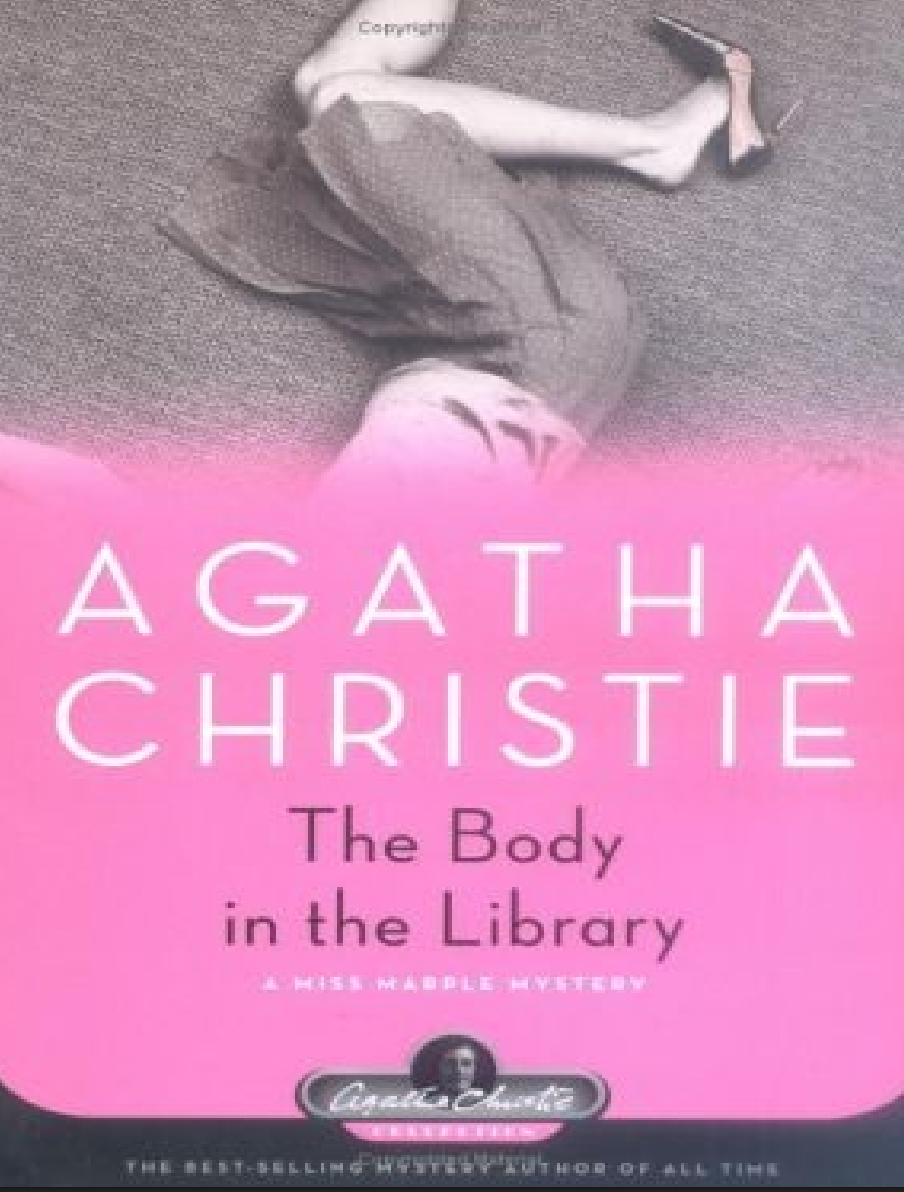
Я прикрепила файл-книгу “The body in the library” нужно найти во всем тексте 5 гипербол, 3 идиомы, 3 иронии, 5 метафор, 5 сравнений. В другом файле задание подробно описано
Выбрать рассказ на английском языке английского или американского автора. Подготовить сообщение о его биографии и творчестве (The author’s biography and works). Сделать краткий пересказ содержания текста (Summary). Дать характеристику главных героев (The characters’ sketches). Сформулировать главную идею текста с позиции автора (The message of the author). Выразить собственное отношение к проблемам, затрагиваемым в тексте (Personal opinion). Подготовить перевод отрывка (Translation of an abstract). Составить словарь слов и выражений по тексту (Glossary).
FIGURATIVE LANGUAGE
|
Device |
Meaning & Example |
|
Allusion |
Allusion and poetry seem to go hand in hand – each one makes the other stronger. An allusion is a word or phrase designed to call something to mind, without mentioning that thing explicitly. This something in poetry can be anything, from another literary work, to the Bible, to popular events. His opponent was looking for his Achilles’ heel to beat him. The property tycoon named his housing society Eden Garden. The decision of the apex court would certainly open Pandora’s Box. |
|
Analogy |
An analogy is a comparison in which an idea or a thing is compared to another thing that is quite different from it. It aims at explaining that idea or thing by comparing it to something that is familiar. Metaphors and similes are tools used to draw an analogy. Therefore, analogy is more extensive and elaborate than either a simile or a metaphor. “The structure of an atom is like a solar system. The nucleus is the sun, and electrons are the planets revolving around their sun.” |
|
Anthropomorphism |
Anthropomorphism is a literary device that can be defined as a technique in which a writer ascribes human traits, ambitions, emotions, or entire behaviors to animals, non-human beings, natural phenomena, or objects. Personification is an act of giving human characteristics to animals or objects to create imagery, while anthropomorphism aims to make an animal or object behave and appear like it is a human being.
Pinocchio, the famous wooden doll, was anthropomorphized when he was given the ability to talk, walk, think, and feel like real boy. Fables and fairy tales usually have characters that can serve as anthropomorphism examples. |
|
Apostrophe |
Apostrophe is one of the more elusive literary devices and presents students with difficulty in identifying its usage. Not to be confused with the punctuation mark of the same name, apostrophe is a rhetorical device used by playwrights and authors whenever their characters address a character that isn’t present in the scene. To make matters more confusing. An apostrophe is often used by characters who are addressing a personification or an idea. Once you learn the characteristics of an apostrophe, identifying the use of this literary device will be easy. |
|
Dysphemism |
Dysphemism is originated from the Greek word dys, means “miss,” or “none,” and pheme, which means “reputation,” or “speech.” It is a figure of speech that is defined as the use of disparaging or offensive expressions instead of inoffensive ones. Dysphemism is the use of negative expressions instead of positive ones. A speaker uses them to humiliate or degrade the disapproved person or character. Dysphemistic Epithets – The use of animal names, such as “pig,” “bitch,” “rat,” “dog,” or “snake.” Euphemistic Dysphemism – This is when a soft expression is |
|
used without offending. Dysphemistic Euphemism – It is used as a mockery between close friends without any animosity. “-ist” Dysphemism – Targeted at a particular ethnicity. Name Dysphemism – It is used when someone is called by his name, rather than by using his proper title, such as “How are you Bill?” (Instead of “Uncle Bill”). Non–verbal Dysphemism – It is used when offending someone with gestures. Cross–cultural Dysphemism – Different slang terms are used as dysphemistic in one culture; on the other hand, they might have a totally different meaning in other cultures. For instance, “fag” is a slur used for gay man in American English, whereas, in British English it used for a cigarette. |
|
|
Euphemism |
The term euphemism refers to polite, indirect expressions that replace words and phrases considered harsh and impolite, or which suggest something unpleasant. Euphemism is an idiomatic expression, which loses its literal meanings and refers to something else, in order to hide its unpleasantness. For example, “kick the bucket” is a euphemism that describes the death of a person. In addition, many organizations use the term “downsizing” for the distressing act of “firing” its employees. |
|
Extended Metaphor |
The term “extended metaphor” refers to a comparison between two unlike things that continues throughout a series of sentences in a paragraph, or lines in a poem. It is often comprised of more than one sentence, and sometimes consists of a full paragraph. “Bobby Holloway says my imagination is a three-hundred-ring circus. Currently I was in ring two hundred and ninety-nine, with elephants dancing and clowns cart wheeling and tigers leaping through rings of fire. The time had come to step back, leave the main tent, go buy some popcorn and a Coke, bliss out, cool down.” |
|
Hyperbole |
Hyperbole, derived from a Greek word meaning “over-casting,” is a figure of speech that involves an exaggeration of ideas for the sake of emphasis.
My grandmother is as old as the hills. Your suitcase weighs a ton! She is as heavy as an elephant! |
|
Idiom |
The term idiom refers to a set expression or a phrase comprising two or more words. An interesting fact regarding the device is that the expression is not interpreted literally. The phrase is understood to mean something quite different from what individual words of the phrase would imply. Alternatively, it can be said that the phrase is interpreted in a figurative sense. Further, idioms vary in different cultures and countries. |
|
Irony |
Irony is a figure of speech in which words are used in such a way that their intended meaning is different from the actual meaning of the words. It may also be a situation that ends up in quite a different way than what is generally anticipated. In simple words, |
|
it is a difference between appearance and reality. On the grounds of the above definition, we distinguish two basic types of irony: (1) verbal irony, (2) situational irony, (3) dramatic irony. Verbal irony involves what one does not mean. For example, when in response to a foolish idea, we say, “What a great idea!” This is verbal irony. Situational irony occurs when, for instance, a man is chuckling at the misfortune of another, even when the same misfortune is, unbeknownst to him, befalling him. Dramatic irony is frequently employed by writers in their works. In situational irony, both the characters and the audience are fully unaware of the implications of the real situation. In dramatic irony, the characters are oblivious of the situation, but the audience is not. For example, in Shakespeare’s Romeo and Juliet, we know well before the characters that they are going to die. In real life circumstances, irony may be comical, bitter, or sometimes unbearably offensive. |
|
|
Litotes |
This is the strategy of understatement often employed to provide subtle emphasis, frequently for ironic effect or to underline a passionate opinion: “The assassin was not unacquainted with danger.” |
|
Meiosis |
A dismissive epithet, such as treehugger, or a humorously dismissive understatement (also known as tapinosis), such as the Monty Python and the Holy Grail gem “It’s just a flesh wound!” |
|
Merism |
Merism is a figure of speech by which something is referred to by a conventional phrase that enumerates several of its constituents or traits. Hook, line, and sinker. (To swallow something hook, line, and sinker means to swallow it completely.) High and low. (To search high and low means to look for something everywhere) Lock, stock, and barrel. (Referring to the different parts of a gun. As a mersim, it refers to the whole of any object) Flesh and bone. (Referring to the body). Search every nook and cranny. (Search everywhere). |
|
Metaphor |
Metaphor is a figure of speech that makes an implicit, implied, or hidden comparison between two things that are unrelated, but which share some common characteristics. In other words, a resemblance of two contradictory or different objects is made based on a single or some common characteristics. My brother was boiling mad. (This implies he was too angry.) The assignment was a breeze. (This implies that the assignment was not difficult.) |
|
Metonymy |
Metonymy is a figure of speech that replaces the name of a thing with the name of something else with which it is closely associated. We can come across examples of metonymy both from literature and in everyday life. Metonymy is often confused with another figure of speech called “synecdoche.” These devices resemble one another, but are not the same. Synecdoche refers to a thing by the name of one of its |
|
parts. For example, calling a car “a wheel” is a synecdoche, as a part of a car – the “wheel” – stands for the whole car. In a metonymy, on the other hand, the word we use to describe another thing is closely linked to that particular thing, but is not a part of it. For example, the word “crown” is used to refer to power or authority is a metonymy. It is not a part of the thing it represents. |
|
|
Oxymoron |
Oxymoron is a figure of speech in which two opposite ideas are joined to create an effect. The common oxymoron phrase is a combination of an adjective preceded by a noun with contrasting meanings, such as “cruel kindness,” or “living death”. It is important to understand the difference between an oxymoron and a paradox. A paradox may consist of a sentence, or even a group of sentences. An oxymoron, on the other hand, is a combination of two contradictory or opposite words. A paradox seems contradictory to the general truth, but it does contain an implied truth. An oxymoron, however, may produce a dramatic effect, but does not make literal sense.
Open secret Tragic comedy Seriously funny |
|
Paradox |
The term paradox is from the Greek word paradoxon, which means “contrary to expectations, existing belief, or perceived opinion.” It is a statement that appears to be self-contradictory or silly, but which may include a latent truth. It is also used to illustrate an opinion or statement contrary to accepted traditional ideas. A paradox is often used to make a reader think over an idea in innovative way. Your enemy’s friend is your enemy. I am nobody. “What a pity that youth must be wasted on the young.” – George Bernard Shaw |
|
Paronomasia |
Punning wordplay, including any of many types, including homophonic or homographic puns, both of which are included in this example: “You can tune a guitar, but you can’t tuna fish. Unless of course, you play bass.” |
|
Personification |
Personification is a figure of speech in which a thing – an idea or an animal – is given human attributes. The non-human objects are portrayed in such a way that we feel they have the ability to act like human beings. For example, when we say, “The sky weeps,” we are giving the sky the ability to cry, which is a human quality. Thus, we can say that the sky has been personified in the given sentence.
Look at my car. She is a beauty, isn’t she? The wind whispered through dry grass. The flowers danced in the gentle breeze. |
|
Proverb |
A proverb is a brief, simple, and popular saying, or a phrase that |
|
gives advice and effectively embodies a commonplace truth based on practical experience or common sense. A proverb may have an allegorical message behind its odd appearance. The reason of popularity is due to its usage in spoken language, as well as in folk literature.
Early to bed and early to rise, makes a man healthy, wealthy and wise. Laugh and the world laughs with you, weep and you weep alone. Absence makes the heart grow fonder. |
|
|
Pun |
A pun is a play on words that produces a humorous effect by using a word that suggests two or more meanings, or by exploiting similar sounding words that have different meanings.
Humorous effects created by puns depend upon the ambiguities the words entail. These ambiguities arise mostly in homophones and homonyms. For instance, in the sentence, “A happy life depends on a liver,” the word liver can refer to the bodily organ, or simply a person who lives. Similarly, in the saying “Atheism is a non-prophet institution,” the word “prophet” is used instead of “profit” to produce a humorous effect. |
|
Simile |
A simile is a figure of speech that makes a comparison, showing similarities between two different things. Unlike a metaphor, a simile draws resemblance with the help of the words “like” or “as.” Therefore, it is a direct comparison. Our soldiers are as brave as lions. Her cheeks are red like a rose. He is as funny as a monkey. |
|
Symbol |
Symbolism is the use of symbols to signify ideas and qualities, by giving them symbolic meanings that are different from their literal sense. Symbolism can take different forms. Generally, it is an object representing another, to give an entirely different meaning that is much deeper and more significant. Sometimes, however, an action, an event or a word spoken by someone may have a symbolic value. For instance, “smile” is a symbol of friendship. Similarly, the action of someone smiling at you may stand as a symbol of the feeling of affection which that person has for you. |
|
Synecdoche |
Synecdoche is a literary device in which a part of something represents the whole, or it may use a whole to represent a part. Synecdoche may also use larger groups to refer to smaller groups, or vice versa. It may also call a thing by the name of the material it is made of, or it may refer to a thing in a container or packaging by the name of that container or packing. |
|
Understatement |
An understatement is a figure of speech employed by writers or speakers to intentionally make a situation seem less important than it really is.
An understatement usually has an ironic effect, as an equally intense response is expected in severe situations, but the |
|
statement in response is the opposite of what was expected. For instance, your friend returns your new coat with a large wine stain on the front of it. In response, you make an understatement, “It doesn’t look too bad.” Therefore, an understatement is opposite to another figure of speech, hyperbole, which is an overstatement. |
Сделайте индивидуальный заказ на нашем сервисе. Там эксперты помогают с учебой без посредников
Разместите задание – сайт бесплатно отправит его исполнителя, и они предложат цены.

Цены ниже, чем в агентствах и у конкурентов
Вы работаете с экспертами напрямую. Поэтому стоимость работ приятно вас удивит
Бесплатные доработки и консультации
Исполнитель внесет нужные правки в работу по вашему требованию без доплат. Корректировки в максимально короткие сроки
Гарантируем возврат
Если работа вас не устроит – мы вернем 100% суммы заказа
Техподдержка 7 дней в неделю
Наши менеджеры всегда на связи и оперативно решат любую проблему
Строгий отбор экспертов
К работе допускаются только проверенные специалисты с высшим образованием. Проверяем диплом на оценки «хорошо» и «отлично»
Работы выполняют эксперты в своём деле. Они ценят свою репутацию, поэтому результат выполненной работы гарантирован
Ежедневно эксперты готовы работать над 1000 заданиями. Контролируйте процесс написания работы в режиме онлайн
Написать реферат + сделать презентацию
Реферат, Корпоративная и социальная ответственность
Срок сдачи к 9 нояб.
написание 1 главы ВКР магистратуры, а именно обзор литературы по теме...
Диплом, Биология
Срок сдачи к 16 нояб.
Отчёт по практике по предмету «Информатика и программирование»
Отчёт по практике, Информатика и программирование
Срок сдачи к 1 нояб.
Цифровые финансовые активы как инструмент обхода санкций
Курсовая, Мировая экономика и международные экономические отношения
Срок сдачи к 7 нояб.
1.Управление бизнес-процессами. 2. Автоматные модели
Контрольная, Бизнес-модели и стратегии управления
Срок сдачи к 27 нояб.
Выполните анализ проектовпо заданиям
Индивидуальный проект, Основы проектной деятельности
Срок сдачи к 29 окт.
Сделать 8 разных презентаций на определенные темы по политологии
Презентация, Политология
Срок сдачи к 2 нояб.
Работа по дефектологии, тема «развитие фонематических представлений у...
Диплом, Дефектология
Срок сдачи к 8 янв.
Заполните форму и узнайте цену на индивидуальную работу!